
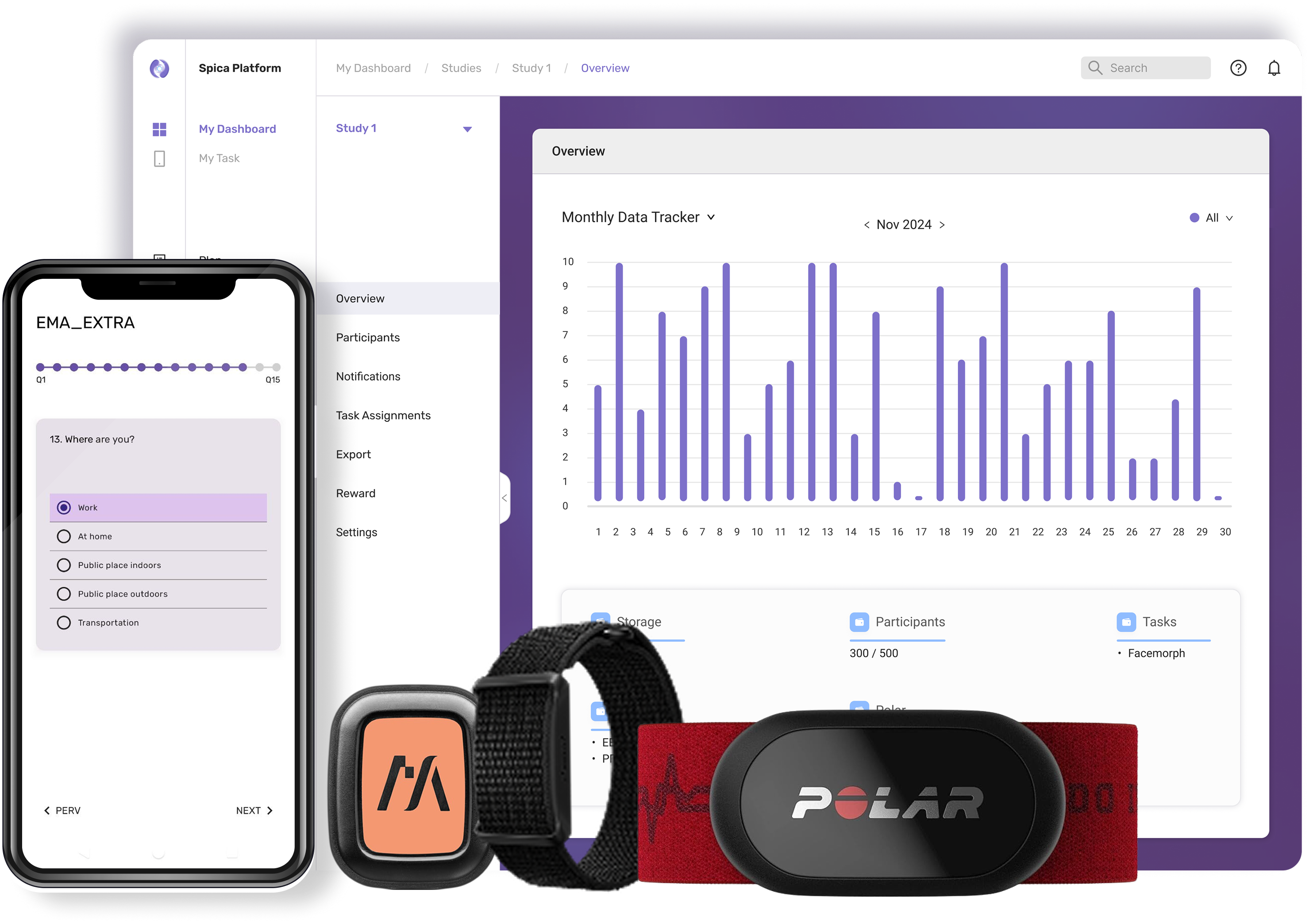


Episodic Assessments
Clinical visits provide limited information and miss day-to-day variability.
Spica integrates wearable sensing, ecological momentary assessment (EMA), and validated digital motor tasks to enable high-resolution, longitudinal Parkinson's data collection beyond the clinic.
Parkinson's disease is highly heterogeneous and dynamic. Traditional clinical assessments capture only snapshots, making it difficult to understand real-world fluctuations and disease progression.
Clinical visits provide limited information and miss day-to-day variability.
Symptoms fluctuate throughout the day but are rarely continuously captured.
Lab-based assessments do not reflect real-life behavior and environment.
Many important symptoms are underreported and undertreated.
Wearable Data · EMA Assessments · Digital Motor & Cognitive Tasks
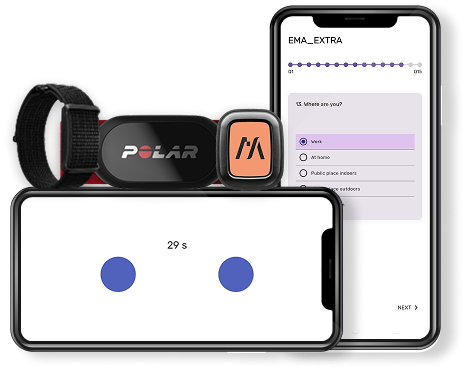
Task execution · EMA responses · Passive + active data synchronization
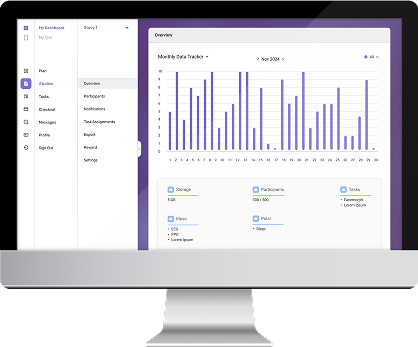
Multimodal visualization · Participant tracking · Advanced analytics & exportable datasets
Wearable Data · EMA Assessments · Digital Motor & Cognitive Tasks
Task execution · EMA responses · Passive + active data synchronization
Multimodal visualization · Participant tracking · Advanced analytics & exportable datasets
Remote Data Collection Mobile App from Parkinsonian Patients.
Institutions:

Study Features:
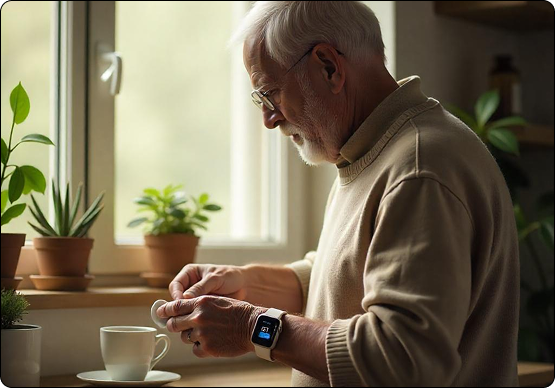
Standardized and validated tasks for comprehensive motor and cognitive assessment.

Assess:

Assess:

Assess:
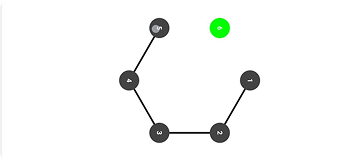
Assess:

Assess:
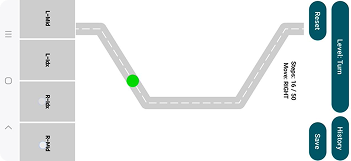
Assess:
Spica synchronizes task performance with continuous physiological signals for a comprehensive view of Parkinson's disease.
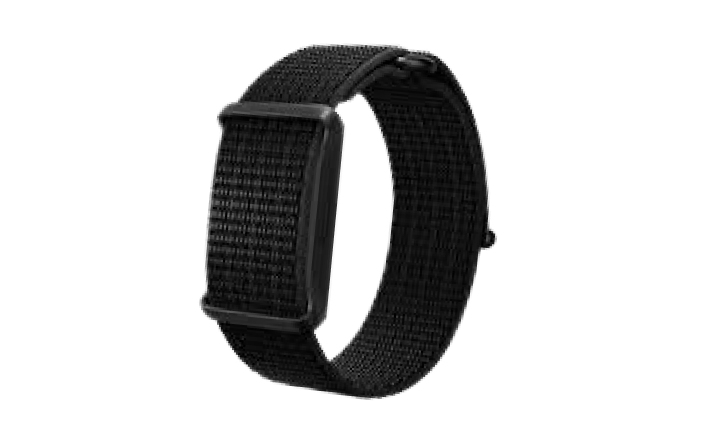
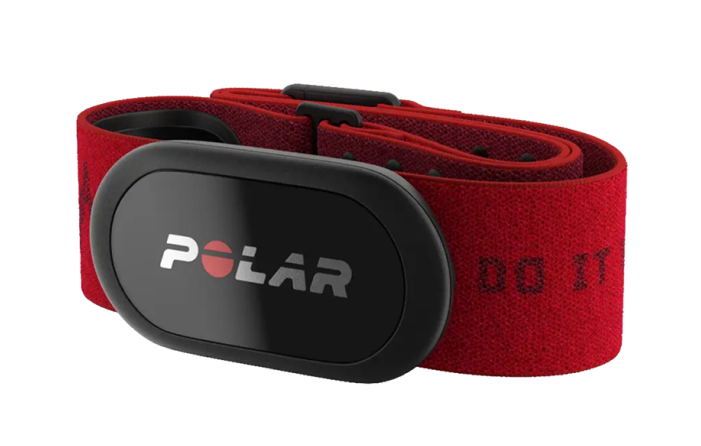
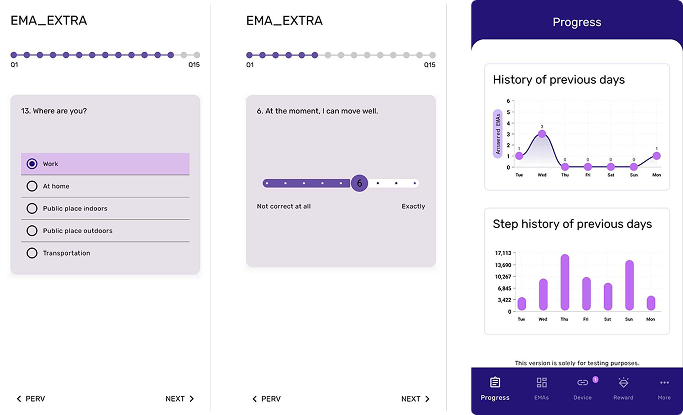
Create fully customized questionnaires and schedules to capture what matters most in your study.
Physiological analysis (HR, sleep, activity,...)
Motor performance metrics
Symptom variability + EMA analysis
Cross-modal correlation discovery
Longitudinal disease tracking
Event-based anomaly detection
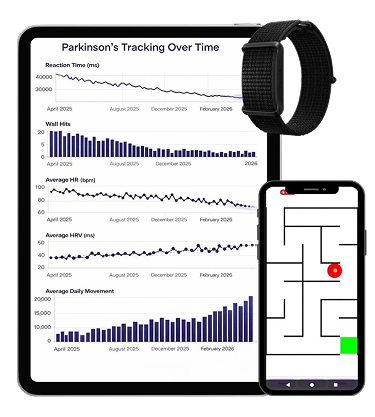
Discover how Spica supports remote monitoring, digital biomarkers, and real-world evidence generation.


