
Accelerating Women’s Health Research With Multimodal Digital Biomarkers
Capture synchronized brain and physiological data in real-world environments using wearable sensors, patient-reported outcomes, and a unified research platform built for longitudinal clinical studies.
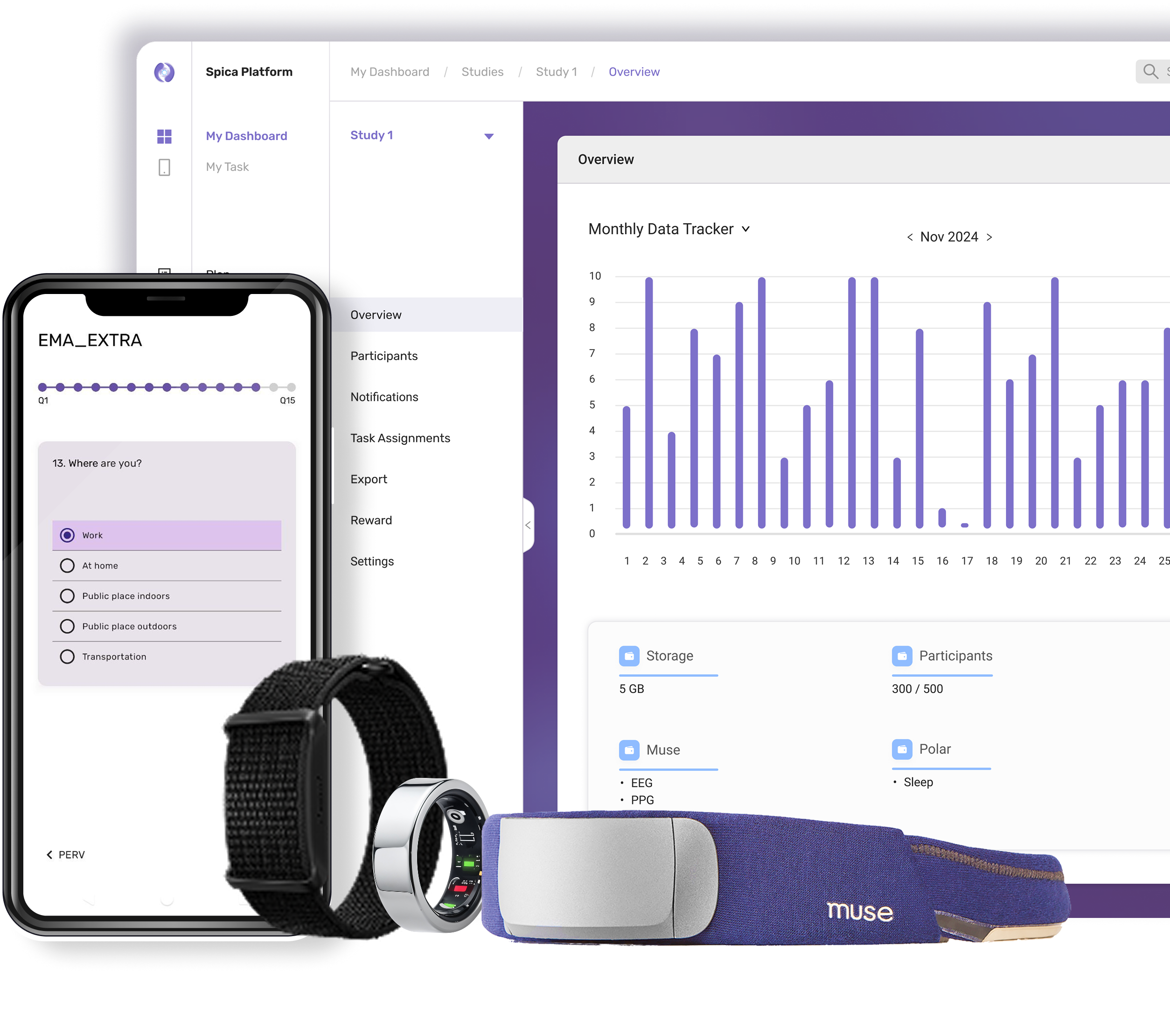


20+
Active Research Projects
10+
Wearable Integrations
08
Countries
100 K+
Hours of Biosignal Data
Why Women's Health Research Needs a New Generation of Digital Biomarkers
Women's physiology is highly dynamic, shaped by hormonal cycles, neural regulation, and autonomic function. Yet most clinical and research studies rely on episodic measurements that fail to capture these continuous biological changes.
Traditional approaches struggle to integrate neural, physiological, and patient-reported data in real-world environments. This limits our understanding of how brain, body, and hormonal systems interact over time.
Spica enables researchers to collect synchronized multimodal data across the menstrual cycle and beyond—supporting longitudinal studies that reflect how women actually live, feel, and function in everyday life.
Key Research Challenges:
- Capturing continuous physiological changes across the menstrual cycle
- Synchronizing neural and autonomic signals
- Moving beyond laboratory-based assessments
- Collecting scalable longitudinal datasets
- Enabling remote participation with minimal burden
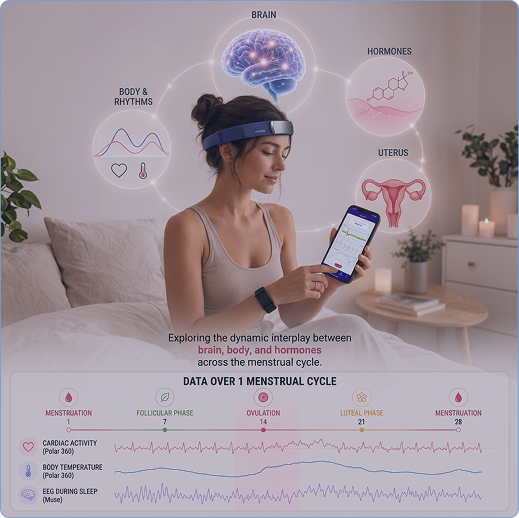
From Isolated Measurements to a Connected Understanding of Women's Health
by combining continuous real-world data with clinical assessments and brain measurements, we uncover personalized patterns across the menstrual cycle and beyond.
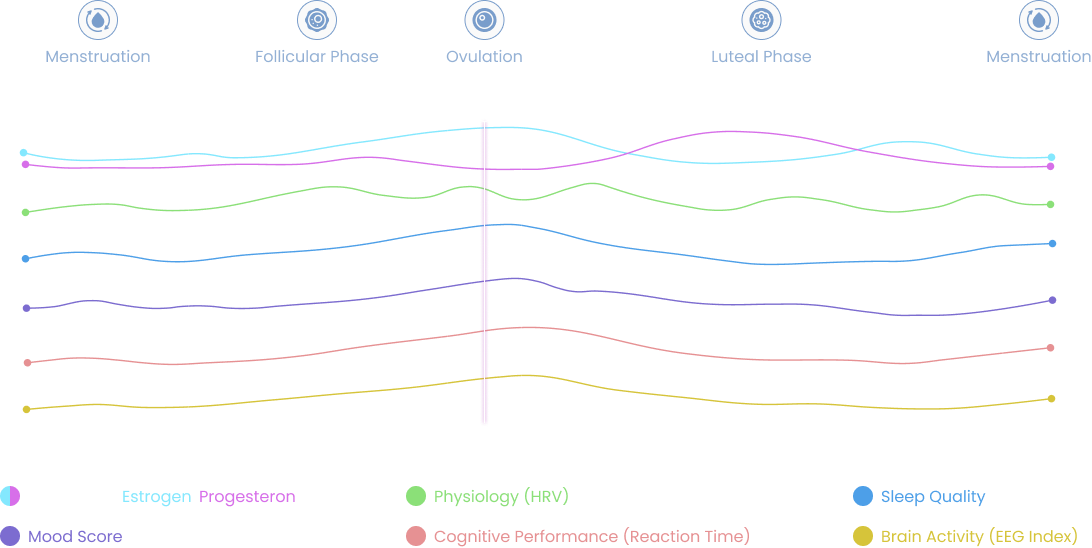
From Wearable Sensors to Research Insights

Data Collection in Real World
- ● Wearable Data
- ● EMA Assessments
- ● Digital Motor & Cognitive Tasks
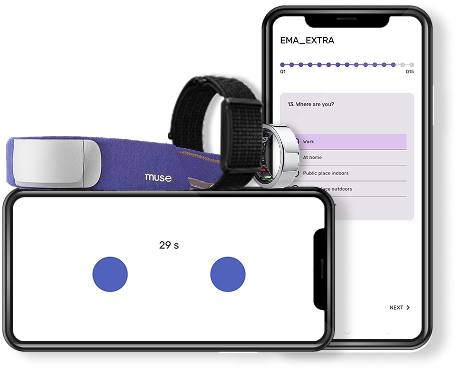
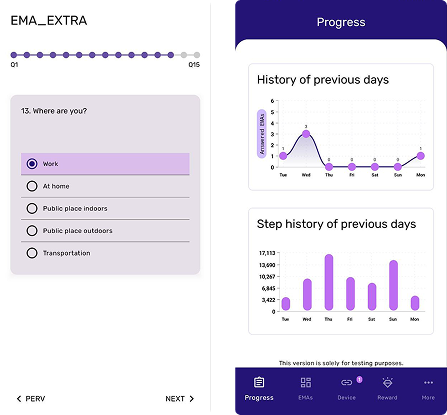
Spica Mobile App (Patient Layer)
- ● Task execution
- ● EMA responses
- ● Passive + active data synchronization
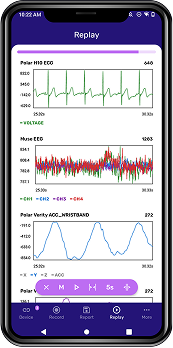

Spica Dashboard (Research Layer)
- ● Multimodal visualization
- ● Participant tracking
- ● Advanced analytics & Exportable datasets
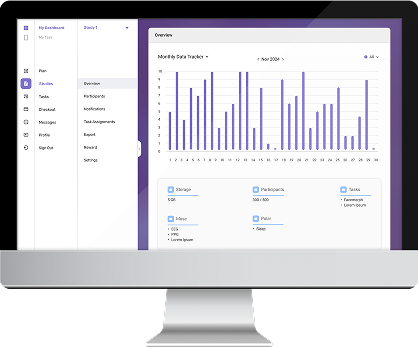
Data Collection in Real World
- ● Wearable Data
- ● EMA Assessments
- ● Digital Motor & Cognitive Tasks
Spica Mobile App (Patient Layer)
- ● Task execution
- ● EMA responses
- ● Passive + active data synchronization
Spica Dashboard (Research Layer)
- ● Multimodal visualization
- ● Participant tracking
- ● Advanced analytics & Exportable datasets
Featured Research Collaboration
Understanding how neural activity interacts with peripheral physiology across hormonal cycles remains one of the most important challenges in women’s health research.
In collaboration with neuroscientists at the Institute for Biomagnetism and Biosignal Analysis, University of Münster, this ongoing longitudinal study investigates synchronized brain–body dynamics using wearable EEG and physiological monitoring in naturalistic environments.
Research Objectives:
- Quantify brain-body coupling across menstrual cycle phases
- Investigate neural-autonomic synchronization
- Evaluate hormonal contraception effects
- Generate longitudinal multimodal datasets
- Support computational biomarker development
Standardized Digital Biomarkers In Women's Health
View All Supported Wearables →Spica integrates continuous and contextual data from wearable sensors and patient-reported inputs to build a unified clinical dataset.
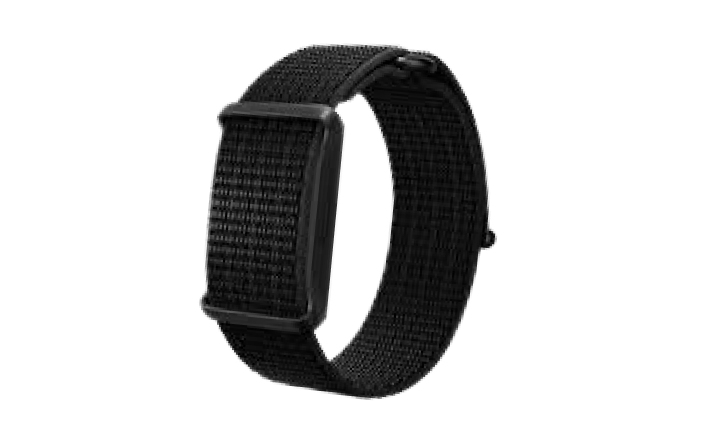
Polar Health Trackers
- ● PPG, HR, HRV
- ● Activity, Steps
- ● Sleep, Temperature
- ● Accelerometry
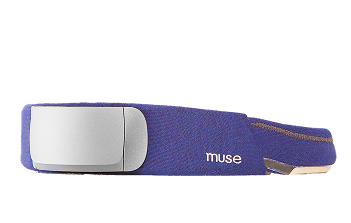
Muse Headband
- ● EEG (up to 6 channels)
- ● PPG, HR, HRV
- ● Gyro
- ● Accelerometer
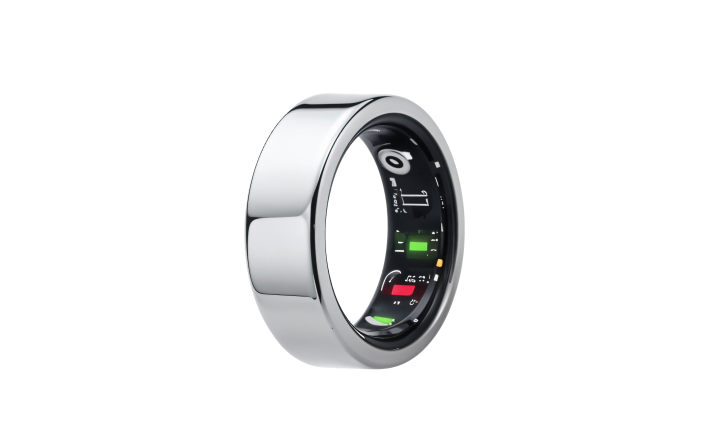
Smart Ring
- ● HR, HRV, SpO₂
- ● Activity, Steps
- ● Sleep
- ● Temperature
Compatible with a wide range of wearable devices to support flexible study and clinical needs.
Research Use Cases


Ready to Advance Women’s Health Research?
Whether you’re designing a pilot study or leading a multicenter clinical trial, Spica provides the infrastructure to collect synchronized, high-quality multimodal data at scale.


